
Engineering Design Program
Design thinking, applied engineering, and project-based problem solving for future engineers.
Have Questions? Ask Us!
Learn More
Program at a Glance
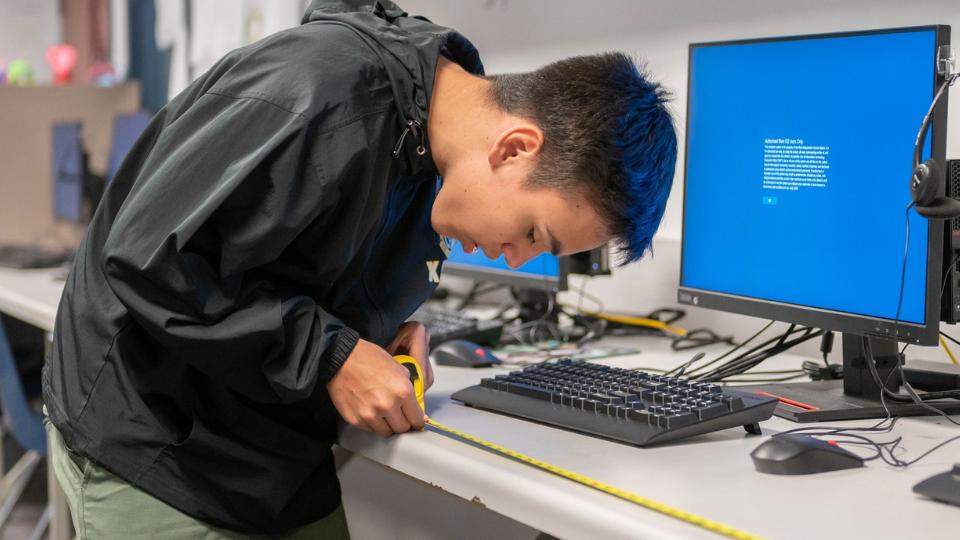
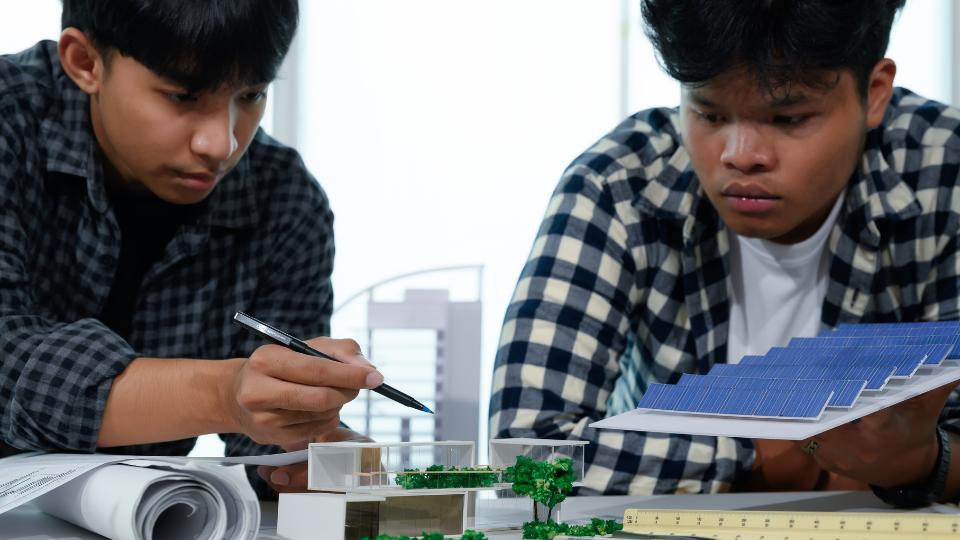
The Engineering Design Program introduces students to the principles of engineering, problem-solving, and the design process through hands-on projects and real-world applications. Students explore how engineers plan, develop, and refine solutions to complex problems using creativity, analytical thinking, and technical skills. This pathway is ideal for students interested in pursuing careers or college degrees in engineering, architecture, industrial design, robotics, or other STEM-related fields.
Highlights
The program begins with Principles of Applied Engineering at the middle school level, giving students an early foundation in engineering concepts and design thinking. Once in high school, students enter Engineering Design, followed by Engineer Your World, where they engage in project-based learning that explores mechanical, electrical, civil, and systems engineering concepts. In Level 3, students move into Advanced Engineering Design & Presentation, where they refine their technical drawing, modeling, and prototyping skills while preparing for the Certified SolidWorks Associate (CSWA) industry credential.
The capstone experience, Practicum in Engineering Design, immerses students in advanced engineering challenges, collaborative design projects, and professional-level software applications. During the practicum, students work toward Autodesk AutoCAD or Inventor certifications, as well as additional SolidWorks certifications if not previously earned. This pathway offers students the opportunity to earn either STEM or Business & Industry endorsement credit.
Benefits & Educational Outcomes
Students develop strong skills in 3D modeling, technical drafting, design presentation, engineering analysis, and iterative problem-solving. They gain hands-on experience using industry-standard tools to design and prototype solutions while learning to communicate ideas effectively through drawings, models, and presentations. The program prepares students for success in engineering pathways in college, including mechanical, civil, electrical, aerospace, or industrial engineering programs.
With multiple opportunities for industry-based certifications, students graduate with recognized professional credentials that enhance employability and support future internships or technical roles. The pathway also supports CCMR credit, helping students build a strong STEM foundation and a competitive edge for both college admissions and career entry in engineering and technical design fields.
Is this program right for your student?
Where will you find this program?


Leave a Review for Engineering Design Program

Supplemental Online Courses
Tuition-Based Courses taken Virtually Outside Regular School Hours
- Intermediate, High School

Flex Scheduling Program
Primarily Online Schooling with On-Campus Opportunities
- Intermediate, High School

Full Time Virtual Program
Complete Online Educational Experience
- Intermediate, High School

Geometry (Intermediate)
Visual reasoning, proof, and real-world modeling — an accelerated geometry course that builds spatial sense and rigorous mathematical argument.
- Intermediate

Algebra (Intermediate)
Algebraic thinking, problem solving, and college-minded rigor — the Grade 8 Algebra experience for advanced intermediate learners.
- Intermediate


Biology (Intermediate)
Inquiry, lab skills, and college-minded science — Grade 8 Biology taught with high-school rigor.
- Intermediate


Fashion Design Program
Design, construction, and creative entrepreneurship in fashion and apparel.
- High School


Future Teacher College Program
College-aligned preparation for education careers — practicum, certification, and pathway advising.
- High School


Geospatial Engineering & Land Surveying College Program
Mapping, surveying, and geospatial systems — hands-on training aligned to college credit.
- High School


Global Business College Program
- High School