


Robotics Program
Robotics engineering, programming, and systems integration that power competitive and workplace skills.
Have Questions? Ask Us!
Learn More
Program at a Glance
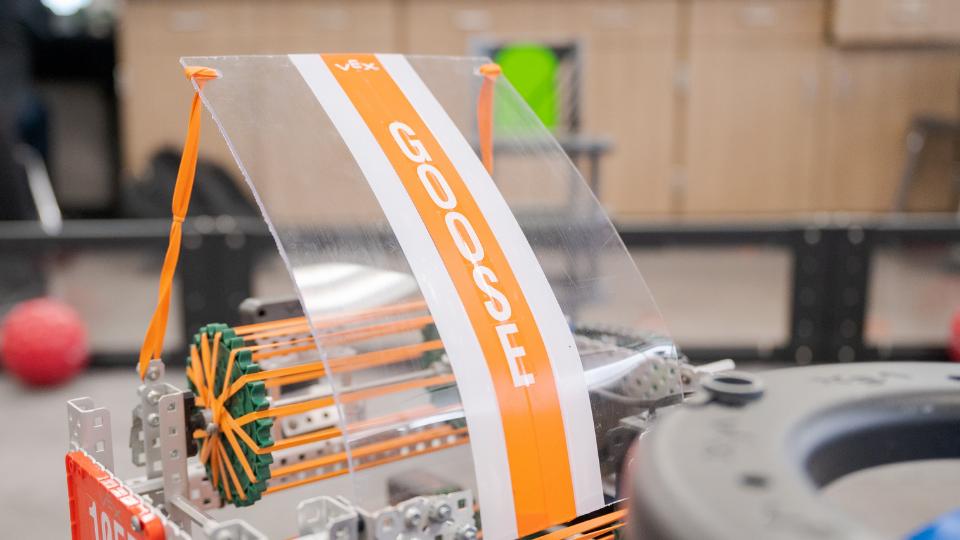
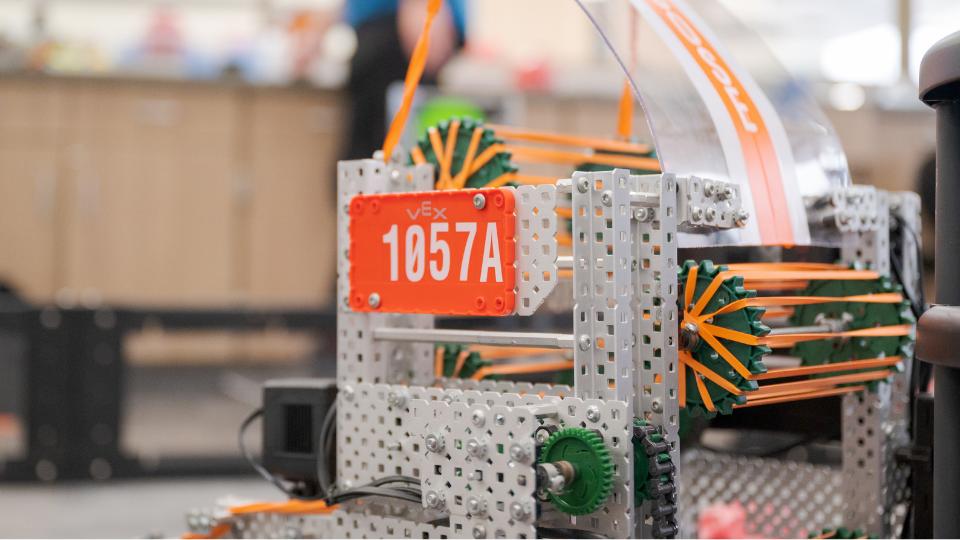
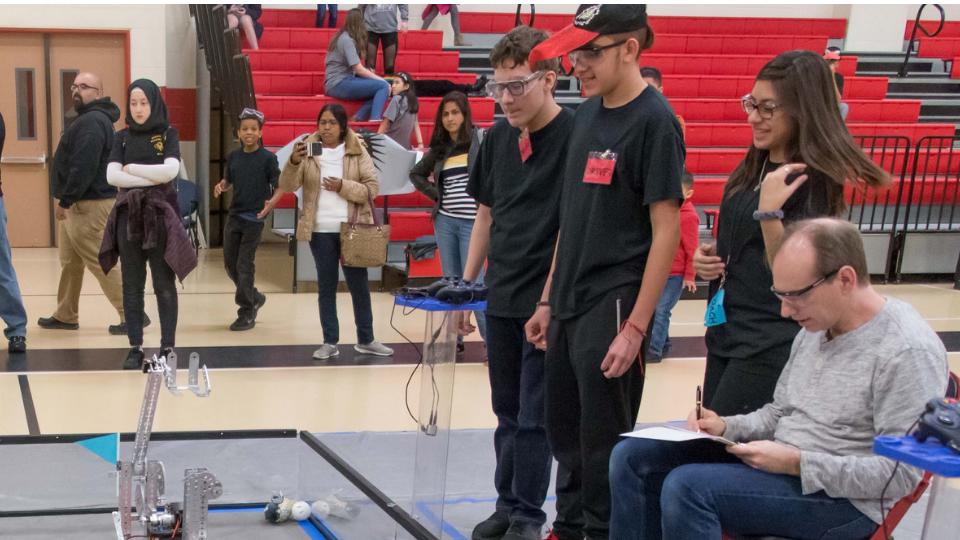
The Robotics Program immerses students in the engineering, programming, and mechanical systems that drive modern automation and robotic technologies. Through hands-on design challenges, collaborative problem-solving, and experiential learning, students explore how robots are built, controlled, and optimized for real-world applications. This pathway is ideal for students interested in engineering, computer science, automation, manufacturing, or competitive robotics environments.
Highlights
Students can begin with an optional course, Principles of Applied Engineering, which introduces foundational engineering concepts, safety practices, and design processes. In high school, they move into Engineering Design followed by Robotics I, where they learn the fundamentals of mechanical systems, sensors, motors, programming logic, and robot construction. At Level 3, students advance into Robotics II, working with more complex robotic systems while preparing for the Autodesk Certified User – Inventor Certification, an industry-recognized credential used across engineering and design fields.
The senior-year Practicum in Robotics serves as the program’s capstone, allowing students to apply their knowledge through advanced builds, competitive robotics environments, or engineering design challenges. During the practicum, students prepare for and may earn the SolidWorks Associate (CSWA-EDU) certification, providing a strong professional credential for engineering and technical careers. Students who completed the Pre-Level may also receive CCMR credit and Level 3 exam exemptions. This program qualifies students for either the STEM or Business & Industry endorsement.
Benefits & Educational Outcomes
Students develop strong engineering skills, technical problem-solving abilities, and hands-on experience designing and programming robotic systems. They learn to work with industry-standard software, interpret engineering drawings, build mechanical systems, and collaborate as part of a design team—skills that are highly transferable to future STEM careers. With CCMR credit and multiple industry certification opportunities, students graduate well-prepared for college pathways in engineering, computer science, robotics, manufacturing, or technology fields. The program provides students with a competitive edge by blending creativity, technical expertise, and real-world engineering practice.
Is this program right for your student?
Where will you find this program?


Leave a Review for Robotics Program

Supplemental Online Courses
Tuition-Based Courses taken Virtually Outside Regular School Hours
- Intermediate, High School

Flex Scheduling Program
Primarily Online Schooling with On-Campus Opportunities
- Intermediate, High School

Full Time Virtual Program
Complete Online Educational Experience
- Intermediate, High School

Geometry (Intermediate)
Visual reasoning, proof, and real-world modeling — an accelerated geometry course that builds spatial sense and rigorous mathematical argument.
- Intermediate

Algebra (Intermediate)
Algebraic thinking, problem solving, and college-minded rigor — the Grade 8 Algebra experience for advanced intermediate learners.
- Intermediate


Biology (Intermediate)
Inquiry, lab skills, and college-minded science — Grade 8 Biology taught with high-school rigor.
- Intermediate


Fashion Design Program
Design, construction, and creative entrepreneurship in fashion and apparel.
- High School


Future Teacher College Program
College-aligned preparation for education careers — practicum, certification, and pathway advising.
- High School


Geospatial Engineering & Land Surveying College Program
Mapping, surveying, and geospatial systems — hands-on training aligned to college credit.
- High School


Global Business College Program
- High School