
Automotive Technology Program
Hands-on automotive repair, diagnostics, and career pathways in transportation technology.
Have Questions? Ask Us!
Learn More
Program at a Glance
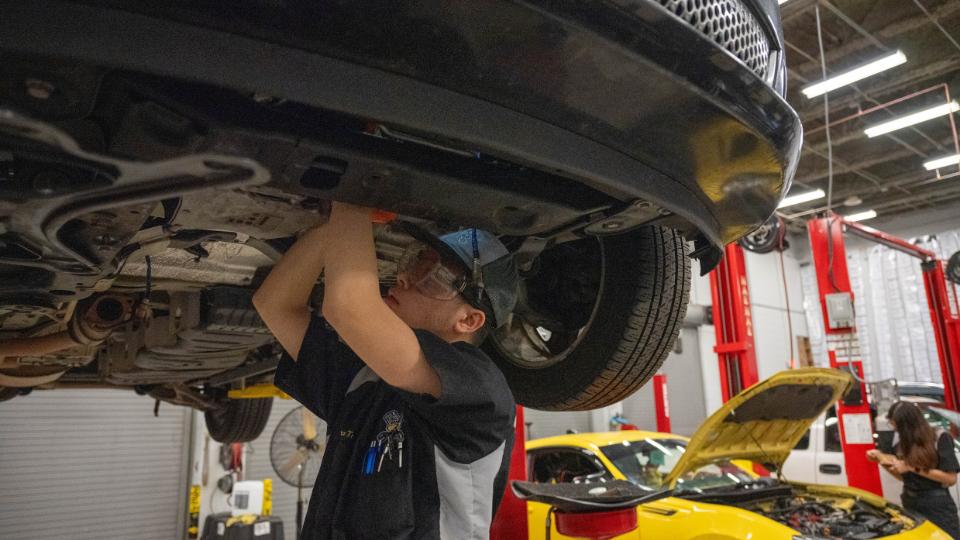
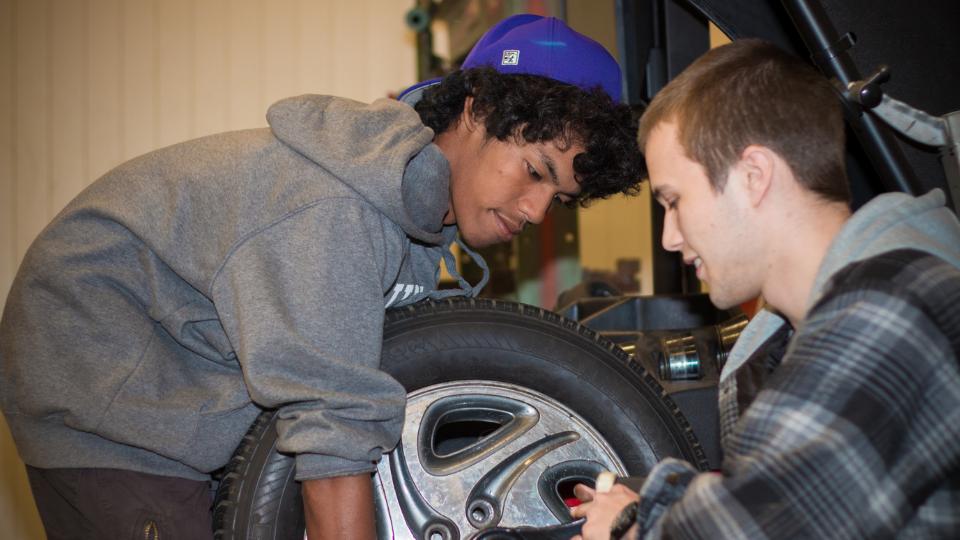
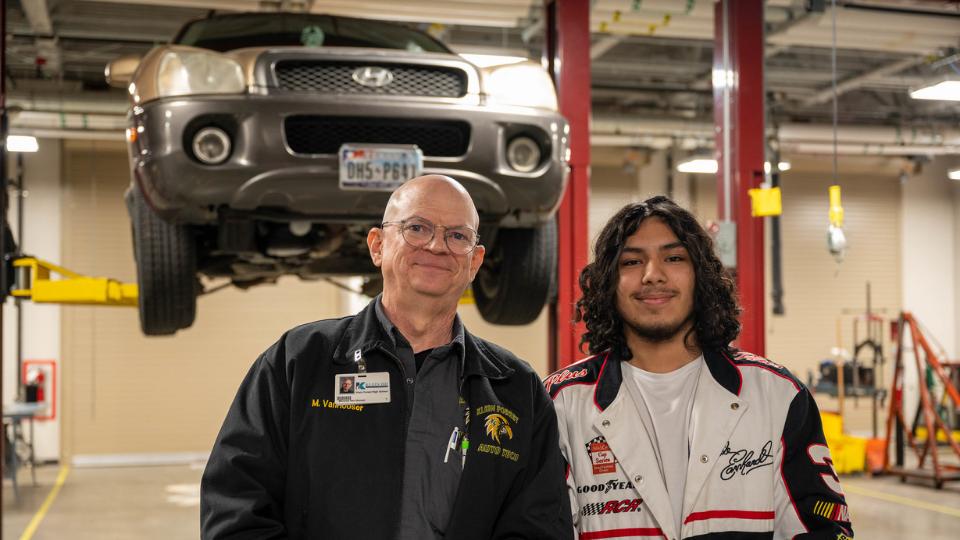
The Automotive Technology Program provides students with hands-on training in the repair, maintenance, and operation of today’s modern vehicles. Beginning with foundational mechanical concepts and progressing into increasingly advanced automotive systems, this pathway prepares students for entry-level technician roles, technical training programs, and future career opportunities within the automotive service and transportation industries. Students learn real-world diagnostic and repair skills that are essential in fast-growing, high-demand automotive careers.
Highlights
Students begin their journey with Automotive Basics, where they learn essential shop safety, engine fundamentals, vehicle systems, and the proper use of tools and equipment. In Level 2, students enter Automotive Technology I, where they explore core automotive systems such as braking, steering, suspension, electrical circuits, and basic engine performance. As they progress into Automotive Technology II at Level 3, students build advanced troubleshooting and repair skills, applying diagnostic techniques used by professional technicians.
Senior-year students complete the Practicum in Automotive Technology or may participate in a career preparation experience that places them in an authentic automotive shop environment. Throughout the program, students prepare for the Automotive Service Excellence (ASE) Entry-Level Certification, a recognized credential that reflects industry-standard knowledge and increases employability.
Benefits & Educational Outcomes
Students graduate with strong mechanical reasoning, diagnostic abilities, and practical hands-on experience working with automotive systems. The program builds confidence in problem-solving and technical communication while teaching students how to safely and effectively service real vehicles. Graduates are prepared for entry-level roles in repair shops, dealerships, and service centers, or they may choose to continue into technical schools, certificate programs, or apprenticeships. With industry certification opportunities and CCMR credit, students leave the pathway equipped with valuable technical skills and a competitive edge in the transportation and automotive technology workforce.
Is this program right for your student?
Where will you find this program?


Leave a Review for Automotive Technology Program

Supplemental Online Courses
Tuition-Based Courses taken Virtually Outside Regular School Hours
- Intermediate, High School

Flex Scheduling Program
Primarily Online Schooling with On-Campus Opportunities
- Intermediate, High School

Full Time Virtual Program
Complete Online Educational Experience
- Intermediate, High School

Geometry (Intermediate)
Visual reasoning, proof, and real-world modeling — an accelerated geometry course that builds spatial sense and rigorous mathematical argument.
- Intermediate

Algebra (Intermediate)
Algebraic thinking, problem solving, and college-minded rigor — the Grade 8 Algebra experience for advanced intermediate learners.
- Intermediate


Biology (Intermediate)
Inquiry, lab skills, and college-minded science — Grade 8 Biology taught with high-school rigor.
- Intermediate


Fashion Design Program
Design, construction, and creative entrepreneurship in fashion and apparel.
- High School


Future Teacher College Program
College-aligned preparation for education careers — practicum, certification, and pathway advising.
- High School


Geospatial Engineering & Land Surveying College Program
Mapping, surveying, and geospatial systems — hands-on training aligned to college credit.
- High School


Global Business College Program
- High School